Because I’m a little burned out from spending so much time on Leetcode of late, I recently reached out to a subreddit which focuses on infosec career advice (r/SecurityCareerAdvice) to ask more knowledgeable folks how I could demonstrate continued interest in cyber security without spending money I don’t have on a series of certifications. Both responses included suggestions that I write blog posts, with one going a step further and recommending that I write up walkthroughs for whatever I was working on (a huge thank you is in order for that person, who’s given me permission to post a link to their company’s website, https://securityps.com/).
The thing I’ve been working on most recently, which I’ve been picking at slowly but surely for the last few months, is OWASP’s Juice Shop (https://github.com/bkimminich/juice-shop). Juice Shop is an intentionally insecure web application which is designed to teach people like me how to find and exploit vulnerabilities in a realistic setting.
As pretty much everyone who’s written a line of code in the last five years knows, the keys to passing a technical interview are the candidate’s ability to solve algorithmic brain teasers as efficiently as possible, and to explain their thought process as they do so. With software job postings frequently attracting over a thousand applications, this is the admittedly imperfect method by which companies separate the skilled wheat from the underperforming chaff.
Put simply: to get a good job you need to dedicate hundreds of hours to practicing a skill with very little direct translation to the position to which you’ve applied.
“But how can I practice such a niche skill” you ask? Leetcode.com. Where computer science students’ fanciful dreams of $300k per year unicorn jobs go to die.
It is also where I’ve spent the last five weeks.
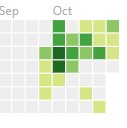
You don’t want to know how many submissions it takes to get to that second shade of green.Read More
 Curiosity Kills Colby